






Every year people across America get together with family and friends and stuff their faces. Some watch football while others listen to older relatives tell stories and reminisce about the past. Thanksgiving is touted as a time to give thanks and to appreciate the good things in each person’s life, but where does this tradition come from? How did it start?
Thanksgiving didn’t become an official American holiday until November of 1863 during the Civil War. President Abraham Lincoln established the holiday as a way to improve relations between the Northern and Southern states as well as the tribal nations. It had been just a year prior when a mass execution of the Dakota tribal member had happened. Corrupt federal agents kept the tribe from receiving food and provisions. On the brink of death by starvation, the tribe members fought back, resulting in the Dakota War of 1862. President Lincoln then ordered 38 Dakota men to die from hanging. He felt that Thanksgiving would offer an opportunity to bridge the hard feelings between the Native Americans and the federal government.
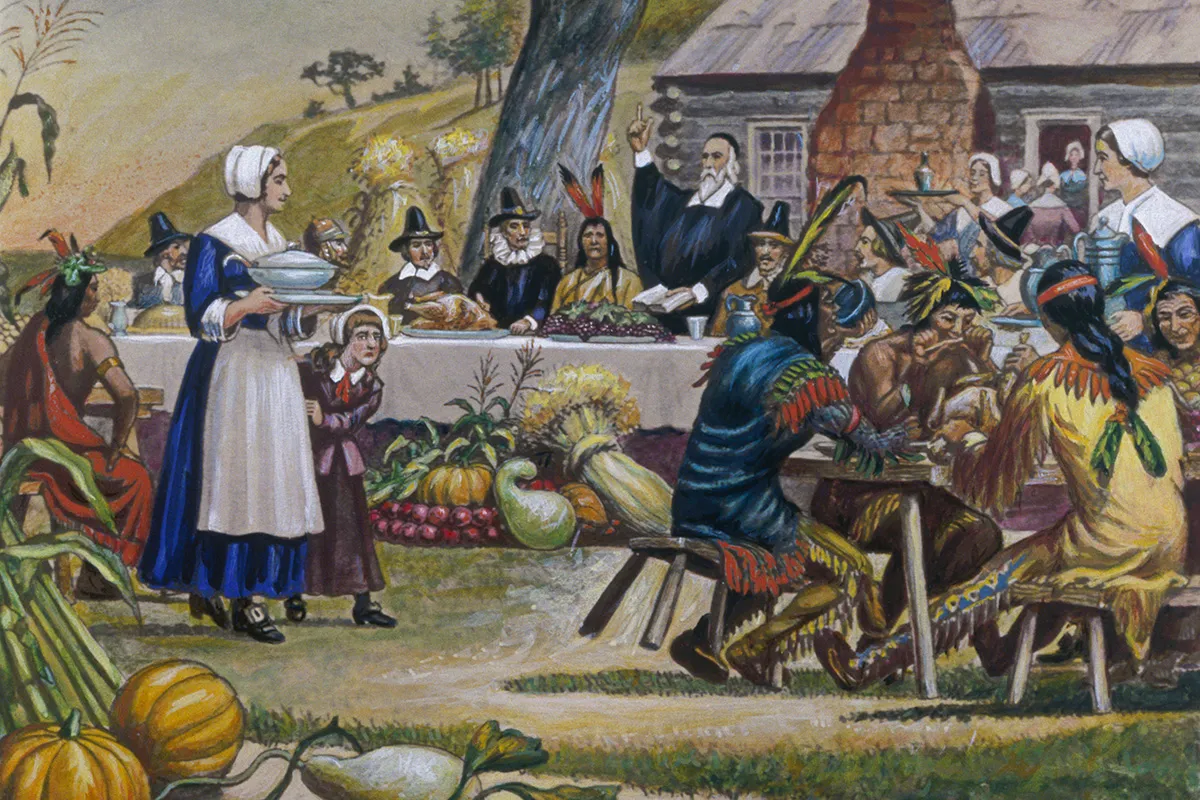
Most people link Thanksgiving to the Pilgrims and their friendship with the Indians, They say it all started during the autumn of 1621 . About 90 Wampanoag joined together with 52 English people in what is now known as Plymouth, Massachusetts, to mark a successful harvest. Today this is known as the First Thanksgiving, though this wasn’t what they called it then. Most of the stories about the festival at Plymouth were created years after the first actual Thanksgiving, and the origin stories don’t tell the real tale.
The story does start with the arrival of the Plymouth settlers. They settled in America seeking religious freedom from King James l. By the time the settlers had arrived, the Wampanoag tribe was already in their winter home. The settlers knew nothing about growing, farming, or living through winter, as they had just come from a milder climate and a more settled country. England during the 1600s didn’t have harsh winters like in the New World, especially like the winters on the east coast. Though it could get cold in England, the pilgrims hadn’t expected the hardships of their first winter in America.
When the Pilgrims met the Native Americans, they saw themselves as civilized and the Native Americans as savages. On the other hand, the vile behavior of the pilgrims made the Wampanoag tribe believe they were the ones suffering from an invasion of barbarians, especially when the pilgrims desecrated their burials grounds. This difference in culture and perspective let to many misunderstanding and some conflict.
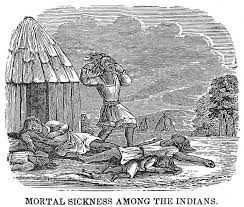
Before the Pilgrims, Native Americans didn’t experience illnesses from livestock, overcrowding, or poor hygiene. This ended with the arrival of the Pilgrims. At that time, most of the English saw bathing as unhealthy, and they rarely removed all of their clothing at once. This led to an increase in diseases which they brought with them to the New World. Even before the arrival of the Pilgrims, English and French fisherman would transmit diseases to tribes when they came ashore to find fresh water, firewood, and to capture Native Americans for slave trade.
In three years, the plague wiped out about 96% of coastal New England. Those who survived left carrying the disease with them. Many who had not actually contacted the Europeans still perished. When the Pilgrims arrived in 1620, the plague was far from over. Throughout their time, religion served as a means of justification. The Pilgrims believed the widespread death and devastation of Native Americans due to the disease was divine providence and that God was willing them to take over the land.
The “first Thanksgiving” wasn’t supposed to happen. The only reason the Native Americans and Pilgrims ended up together was because the Wampanoag came after hearing celebratory gunfire. This feast did occur during a relative peace time between the Pilgrims and the Native Americans. The Wampanoag were essential to the colonists’ survival; they helped the starving colonists and put in place a mutual defense treaty. Unfortunately, within a generation the relationship collapsed. The following decades were filled with tension and numerous wars including the brutal Pequot War and the King Philip’s War, which resulted in massacres of Native Americans.
No one knows how the Pilgrims ended up in Massachusetts, as their original destination was Virginia. Many speculate it was due to a storm or the harsh winter approaching, or even because of the Dutch. Some historians believe the Pilgrims landed in Massachusetts on purpose. It is possible that the Dutch bribed the Mayflower’s captain to sail north, a far distance from New Amsterdam known as present day New York. Although the real reason for their arrival may never be verified, it is the idea of friendship and thanks that has survived.